
No heat or not enough heat
The furnace may run without warming the property, may produce only limited heat, or may stop before the thermostat setting is reached. Mention whether every room is affected and whether airflow still comes from the vents.
A furnace problem can show up as no heat, weak airflow, cold air from the vents, repeated cycling, unusual sounds, or a system that will not start. The right repair depends on the equipment, the symptom, and what the system is doing when the problem occurs.
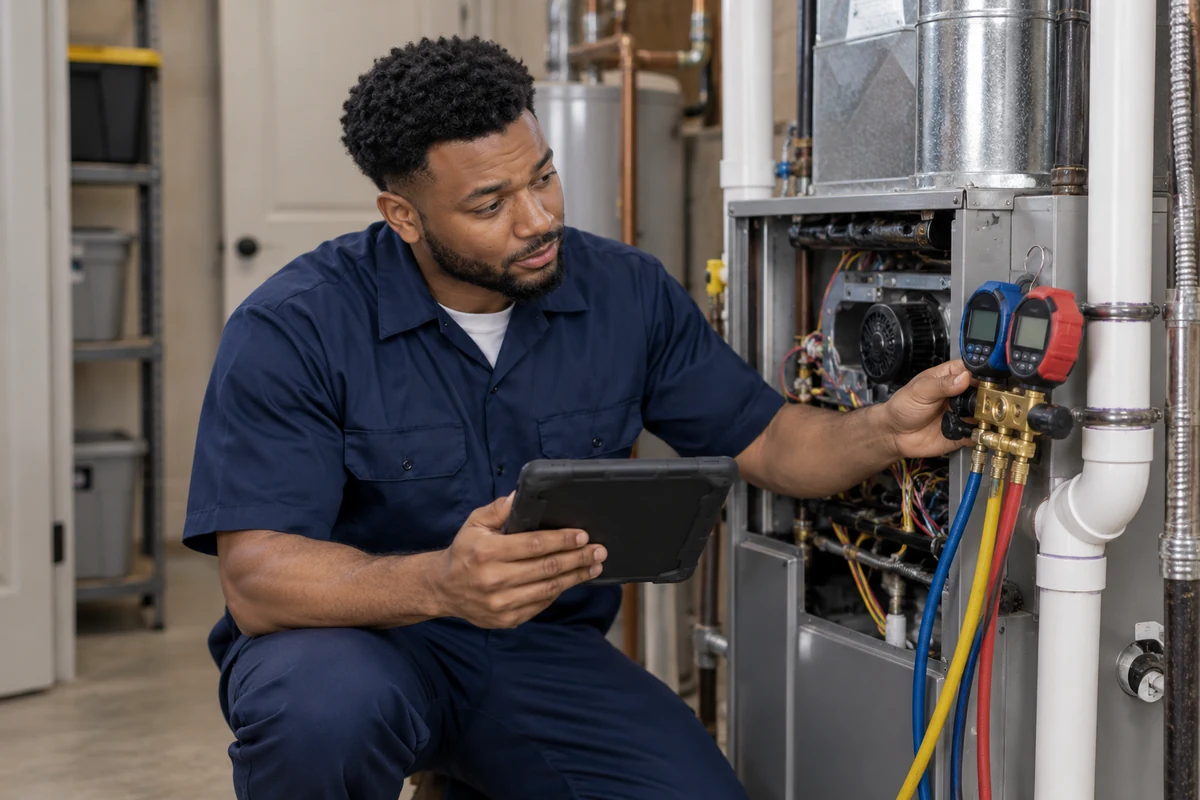
Use this guide to organize the symptoms you are seeing, understand common furnace-service categories, and prepare useful details before you call. Quick Home Services is a service-request resource and does not diagnose equipment remotely.
Describe what you can see, hear, smell, or feel at the property. A clear symptom is more useful than guessing which part has failed.
The furnace may run without warming the property, may produce only limited heat, or may stop before the thermostat setting is reached. Mention whether every room is affected and whether airflow still comes from the vents.
Cold or room-temperature air can be related to thermostat settings, ignition or fuel issues, airflow restrictions, control problems, or a system that is entering a protective cycle. Note whether the air ever becomes warm.
A furnace that does not start can involve controls, power, thermostat communication, safety switches, ignition components, or other equipment-specific causes. Avoid opening energized equipment or bypassing safety controls.
If the furnace starts and stops repeatedly, share how long each cycle lasts and whether the property reaches the set temperature. Airflow, controls, overheating protection, or equipment sizing can all be relevant.
Banging, rattling, grinding, squealing, or persistent unusual odors deserve attention. Shut the system down and leave the area if you notice smoke, a burning smell, or a suspected gas leak.
A system that runs longer while comfort gets worse may need inspection, maintenance, repair, or replacement planning depending on its condition and age.
Similar symptoms can have different causes. These are broad categories to help you understand what may be inspected, not a remote diagnosis.
Dirty filters, closed registers, duct restrictions, blower problems, or other airflow issues can reduce comfort and may contribute to overheating or cycling problems.
Gas and electric furnaces use different heating and control components. A qualified professional can inspect the system and determine which component is actually responsible.
Incorrect settings, wiring problems, sensor issues, control boards, and equipment safety switches can all affect when a furnace starts, stops, or responds to temperature changes.
Motors, belts, bearings, capacitors, burners, heat exchangers, and electrical connections can wear over time. Repeated failures may also make replacement worth discussing.
Explain whether the issue is no heat, cold air, short cycling, unusual noise, weak airflow, or another specific problem. This is more useful than trying to guess the failed part.
A service professional may check thermostat operation, airflow, electrical controls, ignition or heating components, safety devices, and other equipment-specific items.
For older or repeatedly failing equipment, ask for the repair scope, expected service life, replacement options, warranties, and total pricing before authorizing work.
You do not need to diagnose the problem yourself. These details can help the first conversation focus on the right service category and level of urgency.
If you suspect a gas leak, carbon-monoxide problem, fire, smoke, or another immediate danger, leave the affected area and contact the appropriate emergency or utility service before arranging routine HVAC repair.
Browse currently available Quick Home Services locations for local service information and the dedicated phone line for your service request.
Call 24/7 about heating repair, heater problems, no heat, uneven heating, heat pumps, furnaces, thermostats, and residential heating-system service needs.
View Heating repair guideCall 24/7 about urgent HVAC repair needs, no cooling, no heat, system shutdowns, unusual HVAC odors, leaks, and emergency heating or AC service availability.
View Emergency HVAC repair guideCall 24/7 about AC repair, air conditioner problems, AC not cooling, warm air, frozen coils, weak airflow, water leaks, and central air service needs.
View AC repair guideYes. The HVAC line is answered 24/7. Describe the no-heat or furnace problem and ask about current service availability. A 24/7 answered line does not guarantee a specific arrival time.
Several conditions can cause cold air, including thermostat settings, ignition or heating issues, airflow restrictions, controls, or protective shutdowns. A service inspection is the safest way to determine the cause.
Consider the furnace age, repair cost, frequency of breakdowns, comfort problems, efficiency, and replacement warranty. Ask for both repair and replacement details when the decision is not obvious.
Keep the equipment area accessible, note any error codes, avoid resetting the system repeatedly, and be ready to explain when the issue started and what the furnace does during a heating call.
Furnace repair cost depends on the diagnosis, furnace type, failed component, parts, access, labor, and whether additional safety or system issues are found. Ask for the diagnostic findings and a written repair scope before authorizing work.
Call the dedicated HVAC line, describe the symptoms, and ask about current availability in your area.