
No hot water
Mention whether the water is completely cold, becomes warm briefly, or runs out faster than usual. Gas and electric water heaters use different components, so the symptom matters.
Water-heater problems can involve no hot water, inconsistent temperature, water around the tank, unusual noises, discolored hot water, pilot or ignition issues, electric heating elements, controls, valves, or a tank that is reaching the end of its service life.
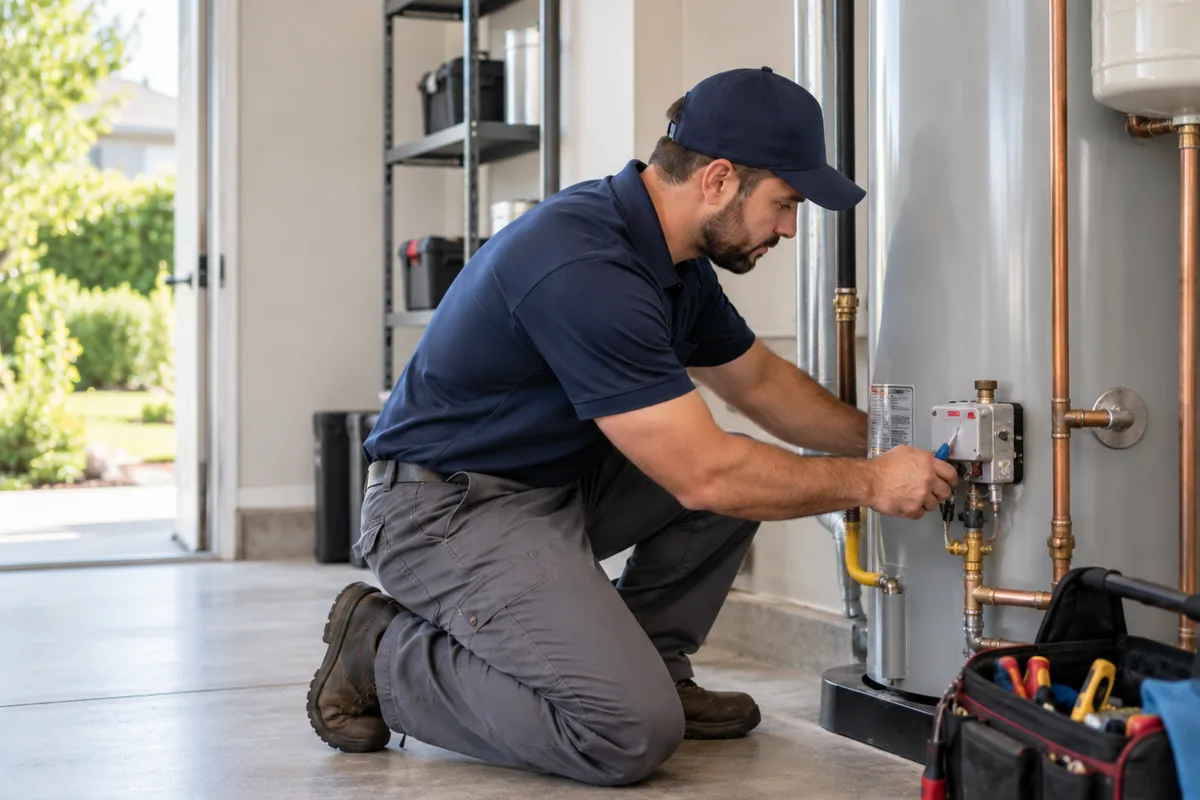
The safest first step is to describe what the water heater is doing and whether there is an active leak, gas odor, electrical concern, or complete loss of hot water. A professional can then evaluate the system type and condition.
Describe what you can see, hear, smell, or feel at the property. A clear symptom is more useful than guessing which part has failed.
Mention whether the water is completely cold, becomes warm briefly, or runs out faster than usual. Gas and electric water heaters use different components, so the symptom matters.
Water may come from piping, valves, fittings, a drain connection, a relief valve, or the tank itself. A leaking tank often changes the repair-versus-replacement decision.
Capacity, sediment, heating components, thermostat settings, usage patterns, or equipment condition can affect how long hot water lasts.
Popping, rumbling, hissing, or banging may be related to sediment, heating, expansion, or other conditions. Describe when the sound occurs.
Water quality symptoms can involve the water heater, plumbing, anode components, sediment, or the incoming water supply. Note whether the issue affects hot water only.
Tankless systems can display error codes or shut down because of flow, venting, ignition, scale, sensors, controls, or other equipment-specific conditions.
Similar symptoms can have different causes. These are broad categories to help you understand what may be inspected, not a remote diagnosis.
Gas burners, pilot or ignition systems, electric heating elements, thermostats, controls, and safety devices can affect water temperature.
Valves, connections, piping, expansion conditions, relief components, drain valves, and the tank itself can be sources of water leakage.
Mineral buildup can contribute to noise, reduced capacity, efficiency problems, and maintenance needs, especially in areas with harder water.
Corrosion or a leaking tank may make replacement more practical than repair. Ask about the equipment age and warranty if known.
Share whether the unit is tank or tankless, gas or electric if known, and whether the issue is temperature, leakage, noise, water quality, or shutdown.
A professional may evaluate controls, heating components, valves, piping, venting, drainage, tank condition, and other relevant parts.
For older or leaking units, review repair cost, replacement cost, capacity, energy type, warranty, and installation requirements before deciding.
You do not need to diagnose the problem yourself. These details can help the first conversation focus on the right service category and level of urgency.
If you smell gas, see smoke, or suspect an electrical hazard, leave the area and contact the appropriate emergency or utility service. For a major water leak, shut off water only if you can do so safely and without touching electrical equipment.
Browse currently available Quick Home Services locations for local service information and the dedicated phone line for your service request.
Call 24/7 about urgent plumbing problems, active leaks, burst pipes, overflowing fixtures, sewer backups, and emergency plumbing service availability.
View Emergency plumber guideCall 24/7 about plumbing leak repair, leaking pipes, burst pipes, hidden water leaks, slab leak concerns, fixture leaks, and urgent leak service.
View Leak repair guideCall 24/7 about drain cleaning, clogged drains, slow drains, recurring backups, toilet clogs, sewer odors, and main drain service needs.
View Drain cleaning guideYes. Explain where the water appears to be coming from and how much is leaking. A leak from a connection may differ from a tank leak, so an inspection is important.
Yes. The Plumbing line can be used for tankless water heater repair, maintenance, descaling, error codes, no-hot-water problems, leaks, and replacement planning where service is available.
The decision depends on age, tank condition, leak source, repair cost, recurring problems, efficiency, capacity, and warranty. A leaking tank often makes replacement more likely.
Service life varies by water-heater type, installation quality, water chemistry, maintenance, usage, and operating conditions. Age is only one factor; tank condition, leaks, corrosion, repair history, efficiency, and parts availability also matter when deciding whether to repair or replace.
The Plumbing line is answered 24/7. You can describe the water-heater problem and ask about current service availability; specific arrival times are not guaranteed.
Call the dedicated Plumbing line, describe the symptoms, and ask about current availability in your area.