
AC running but not cooling
Tell the service professional whether airflow feels normal, whether the air is warm or only slightly cool, and whether the indoor temperature changes at all while the system runs.
Air-conditioning problems are often easier to describe by symptom than by component. A system may run without cooling, blow warm air, freeze, leak water, cycle repeatedly, make unusual noise, or fail to start at all. Those details help narrow the service category without guessing at the repair.
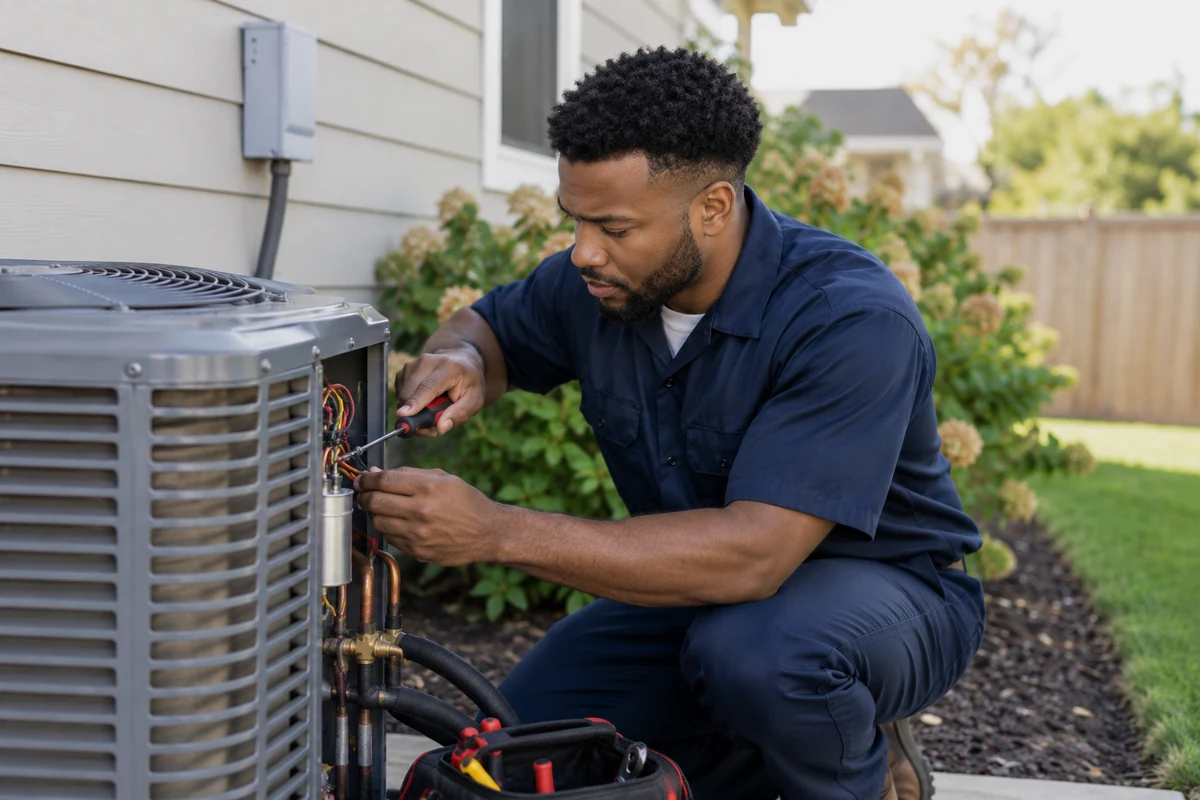
This page covers common AC repair situations for central air and related cooling systems. It is designed to help you prepare a useful service request, not to replace an on-site diagnosis.
Describe what you can see, hear, smell, or feel at the property. A clear symptom is more useful than guessing which part has failed.
Tell the service professional whether airflow feels normal, whether the air is warm or only slightly cool, and whether the indoor temperature changes at all while the system runs.
Warm air may involve thermostat settings, outdoor-unit operation, refrigeration issues, airflow problems, or other system faults. Note whether the outdoor unit is running.
Low airflow can involve filters, ducts, blower components, coils, or system design. Mention rooms that are consistently warmer and whether airflow recently changed.
Ice can be associated with airflow or refrigeration problems. Continuing to run a frozen system can worsen the condition; allow a professional to determine why it froze.
Condensate drain blockages, frozen coils, pans, pumps, or installation issues can lead to water leakage. Protect nearby finishes from damage and avoid electrical components.
Controls, power, capacitors, contactors, motors, thermostat issues, or protective devices can stop the cooling cycle. Repeatedly resetting the system is not a diagnosis.
Similar symptoms can have different causes. These are broad categories to help you understand what may be inspected, not a remote diagnosis.
Restricted filters, dirty coils, duct problems, closed registers, and blower issues can reduce cooling and may contribute to icing.
Capacitors, contactors, motors, controls, wiring, and thermostat signals are common areas a technician may evaluate when equipment will not start or stay running.
Refrigerant leaks, metering problems, coil conditions, and compressor issues can affect cooling. Refrigerant work should be handled by appropriately qualified professionals.
Cooling systems remove moisture from indoor air. Drain restrictions, pumps, pans, and frozen coils can cause water to appear around the equipment.
Describe indoor temperature, thermostat setting, airflow, whether the outdoor unit runs, and when the issue began.
A professional may check airflow, coils, drainage, electrical components, thermostat operation, refrigeration performance, and equipment condition as appropriate.
Ask what failed, what caused the failure if known, what the repair includes, and whether maintenance or replacement should be considered for aging equipment.
You do not need to diagnose the problem yourself. These details can help the first conversation focus on the right service category and level of urgency.
Turn the equipment off and seek appropriate help if you see smoke or sparking, smell burning, or notice an electrical hazard. For water leakage, keep water away from electrical equipment and protect the surrounding area if it is safe to do so.
Browse currently available Quick Home Services locations for local service information and the dedicated phone line for your service request.
Call 24/7 about urgent HVAC repair needs, no cooling, no heat, system shutdowns, unusual HVAC odors, leaks, and emergency heating or AC service availability.
View Emergency HVAC repair guideCall 24/7 about heating repair, heater problems, no heat, uneven heating, heat pumps, furnaces, thermostats, and residential heating-system service needs.
View Heating repair guideCall 24/7 about furnace repair, no heat, cold air from vents, short cycling, unusual furnace noises, ignition problems, and heating-system service needs.
View Furnace repair guidePossible causes include airflow restrictions, dirty or frozen coils, thermostat or control issues, refrigeration problems, outdoor-unit faults, or other equipment conditions. A service inspection is needed to identify the actual cause.
Hot or warm air can be related to thermostat settings, loss of outdoor-unit operation, airflow restrictions, electrical or control faults, refrigeration problems, or other equipment issues. Note whether the outdoor unit runs and whether airflow is normal, then arrange diagnosis rather than guessing at the failed part.
AC repair cost varies with the diagnosis, system type, failed component, refrigerant or electrical work, parts, access, and local labor. Ask what failed, what the repair includes, and whether the quoted work addresses the cause as well as the symptom.
Yes. The HVAC line is answered 24/7. Explain the cooling problem and any safety or extreme-heat concern, then ask about current service availability.
Continuing to run a frozen cooling system can make the problem worse. Turn cooling off and arrange an inspection rather than trying to force the system to operate.
The HVAC line can be used for central AC, mini-split, ductless, heat-pump, and related cooling service requests where service is available.
Call the dedicated HVAC line, describe the symptoms, and ask about current availability in your area.