
No cooling during dangerous heat
Loss of cooling can become urgent for vulnerable occupants or properties exposed to extreme heat. Explain whether the system is completely off, blowing warm air, or running without lowering the temperature.
Some heating and cooling problems can wait for a routine appointment, while others need faster attention because comfort, equipment condition, water leakage, electrical symptoms, or extreme weather is involved. The HVAC line is answered 24/7 so you can explain what is happening and ask about current service availability.
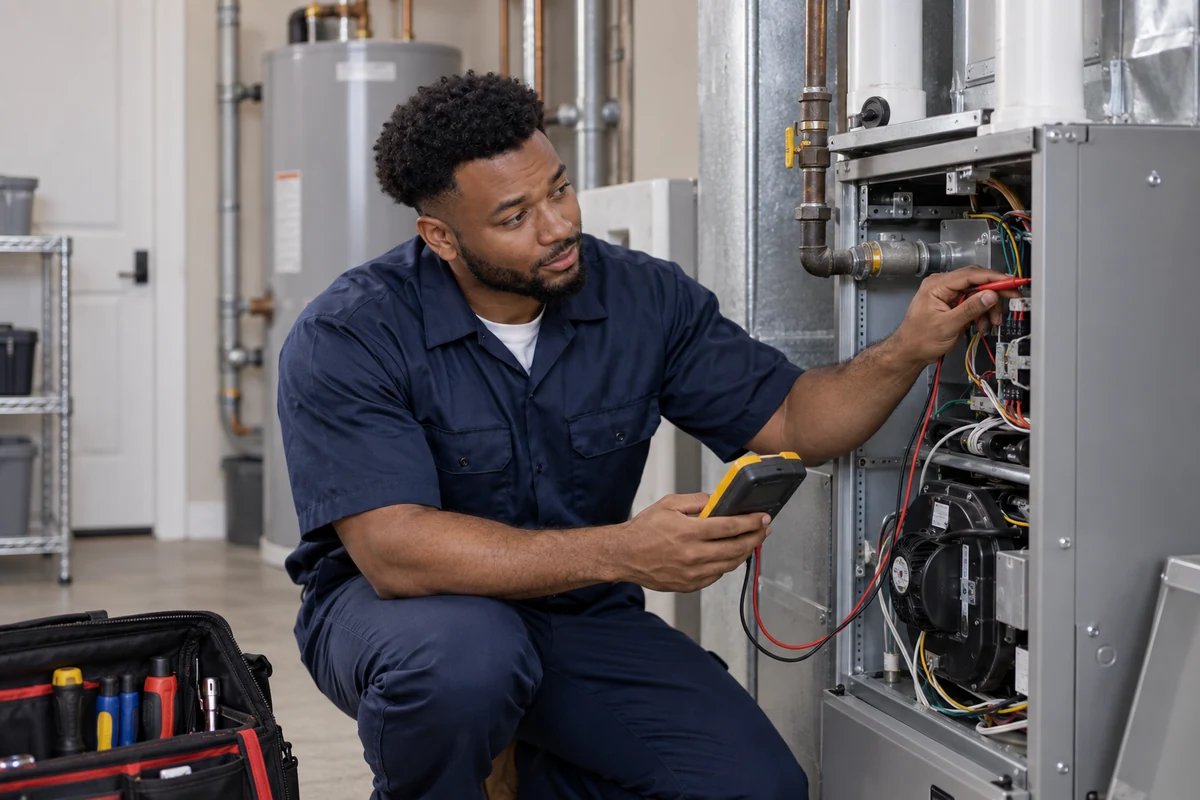
Emergency HVAC service starts with describing the symptom and any immediate safety concern. Do not open electrical panels, bypass equipment safeties, or continue operating a system that is smoking, sparking, or producing a strong burning odor.
Describe what you can see, hear, smell, or feel at the property. A clear symptom is more useful than guessing which part has failed.
Loss of cooling can become urgent for vulnerable occupants or properties exposed to extreme heat. Explain whether the system is completely off, blowing warm air, or running without lowering the temperature.
A heating failure can create comfort and property risks in cold weather. Mention the outdoor conditions, indoor temperature, and whether any portion of the heating system is still operating.
Turn the equipment off if it can be done safely and seek appropriate emergency help if there is smoke, fire, sparking, or an immediate electrical hazard.
Condensate backups, frozen coils, drain problems, or other faults can cause water around HVAC equipment. Protect the area from water damage without touching electrical components.
A system that repeatedly trips a breaker or protective control should not be forced to restart. Repeated resets can hide a fault and create additional risk.
Grinding, metal-on-metal sounds, severe vibration, or other abrupt mechanical changes can justify shutting the system down until it can be evaluated.
Similar symptoms can have different causes. These are broad categories to help you understand what may be inspected, not a remote diagnosis.
Capacitors, contactors, control boards, wiring, motors, safety switches, and power problems can stop HVAC equipment or make it operate unpredictably.
Restricted airflow, blower problems, or refrigeration issues can contribute to icing, reduced cooling, leaks, and shutdowns.
Ignition, fuel, heat-pump, furnace, thermostat, and control problems can create no-heat conditions. Gas-related concerns require special caution.
Compressors, fan motors, blower assemblies, bearings, and other moving components can fail suddenly and may produce unusual noise or vibration.
Start by explaining any smoke, burning odor, suspected gas leak, active water leak, electrical symptom, or extreme indoor temperature so the urgency is clear.
The professional may inspect controls, power, airflow, refrigeration, heating components, drainage, thermostat operation, and safety devices based on the symptom.
Before work begins, confirm availability, diagnostic or service charges, repair scope, parts, expected timing, and any warranty terms.
You do not need to diagnose the problem yourself. These details can help the first conversation focus on the right service category and level of urgency.
For fire, smoke, a suspected gas leak, carbon-monoxide alarm, or another immediate life-safety issue, leave the area and contact the appropriate emergency or utility service first.
Browse currently available Quick Home Services locations for local service information and the dedicated phone line for your service request.
Call 24/7 about AC repair, air conditioner problems, AC not cooling, warm air, frozen coils, weak airflow, water leaks, and central air service needs.
View AC repair guideCall 24/7 about furnace repair, no heat, cold air from vents, short cycling, unusual furnace noises, ignition problems, and heating-system service needs.
View Furnace repair guideCall 24/7 about heating repair, heater problems, no heat, uneven heating, heat pumps, furnaces, thermostats, and residential heating-system service needs.
View Heating repair guideThe HVAC phone line is answered 24/7. You can describe the problem and ask about current service availability. This does not guarantee a technician will arrive within a specific time.
Not always. Urgency depends on weather, occupants, property conditions, and the symptom. Extreme heat, vulnerable occupants, electrical symptoms, or water leakage can make the issue more urgent.
No. If a breaker or safety control trips repeatedly, stop restarting the equipment and arrange an inspection. Repeated trips can indicate an electrical or equipment fault.
Yes. The HVAC line can be used for urgent heating, furnace, heat-pump, central AC, and other HVAC service requests.
Call the dedicated HVAC line, describe the symptoms, and ask about current availability in your area.