
Leaking or failed tank
A leaking tank body or significant corrosion can make replacement more likely than a component repair. Limit water damage safely and ask about replacement options.
Water heater replacement planning should start with hot-water demand, available space, fuel or electrical service, venting or drainage requirements, efficiency goals, local code requirements, and the condition of existing connections. Tank and tankless systems have different installation considerations.
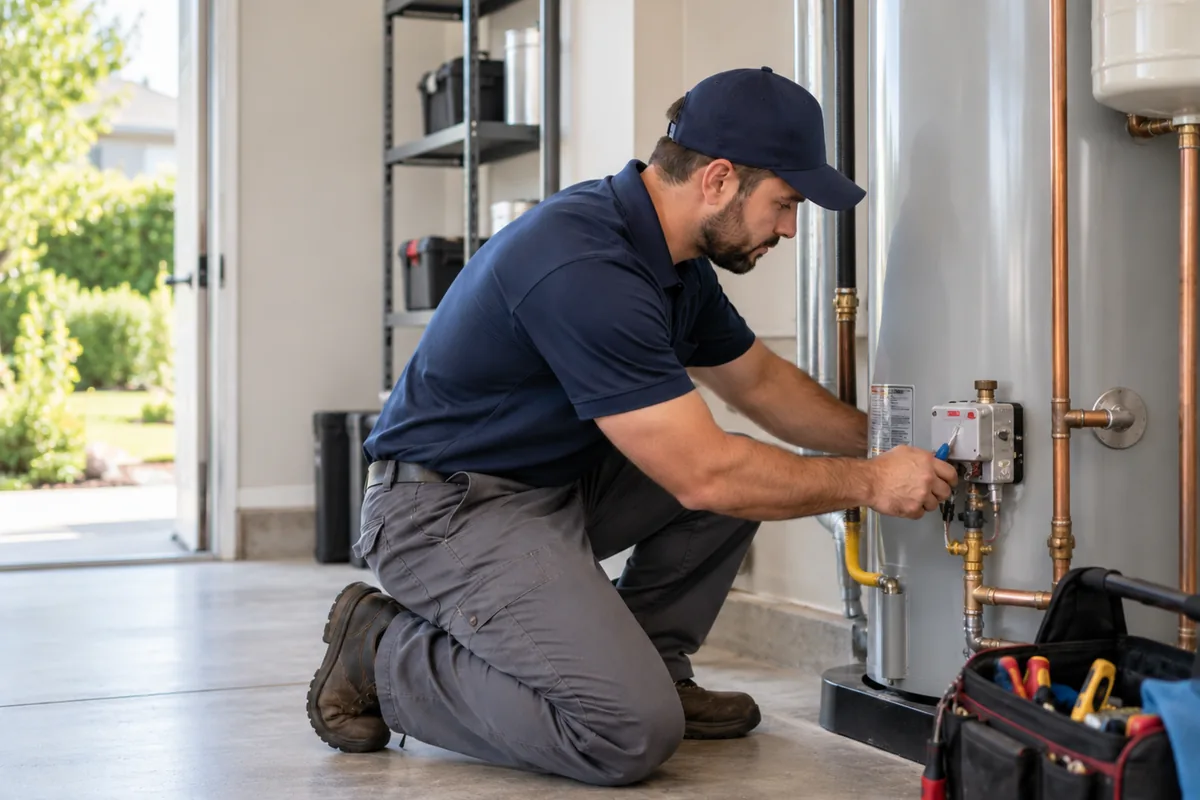
Use this guide to understand common water heater installation situations, organize the symptoms or project details, and prepare for a service conversation. Quick Home Services connects service requests with independent professionals and does not diagnose or quote property-specific work online.
Describe what you can see, hear, smell, or feel at the property. A clear symptom is more useful than guessing which part has failed.
A leaking tank body or significant corrosion can make replacement more likely than a component repair. Limit water damage safely and ask about replacement options.
Capacity, recovery rate, equipment condition, controls, sediment, usage patterns, or changing household demand can all affect hot-water availability.
Compare repair history and current condition with replacement cost, efficiency, warranty, and expected service life.
Tankless conversions and fuel changes may require gas, venting, electrical, water, condensate, or location modifications beyond the appliance itself.
Similar symptoms can have different causes. These are broad categories to help you understand what may be inspected, not a remote diagnosis.
The right system depends on household or building demand, simultaneous fixtures, recovery needs, and available utilities.
Gas, electric, heat-pump, and tankless water heaters have different utility, venting, circuit, clearance, and drainage requirements.
Shutoffs, expansion control, temperature-and-pressure relief discharge, pans, seismic restraints where required, venting, and other code-related details can affect installation.
Explain what is happening now and whether you are seeking repair, replacement, installation, maintenance, or an evaluation. For water heater installation, equipment age, visible damage, recent changes, and urgency can all be useful.
The service professional may inspect the relevant equipment, piping, controls, connections, airflow, drainage, or other system components before recommending a scope of work.
Before authorizing work, confirm what is included, expected timing, warranty terms when offered, permits or code-related requirements when applicable, and whether repair or replacement alternatives should be considered.
You do not need to diagnose the problem yourself. These details can help the first conversation focus on the right service category and level of urgency.
For severe flooding, sewage exposure, a suspected gas leak, water near energized electrical equipment, or another immediate danger, keep away from the hazardous area and contact the appropriate emergency or utility service before arranging routine plumbing work.
Browse currently available Quick Home Services locations for local service information and the dedicated phone line for your service request.
Call 24/7 about water heater repair, no hot water, leaks, temperature problems, tankless units, gas or electric water heaters, and replacement questions.
View Water heater repair guideCall 24/7 about urgent plumbing problems, active leaks, burst pipes, overflowing fixtures, sewer backups, and emergency plumbing service availability.
View Emergency plumber guideCall 24/7 about plumbing leak repair, leaking pipes, burst pipes, hidden water leaks, slab leak concerns, fixture leaks, and urgent leak service.
View Leak repair guideCost varies by tank or tankless type, capacity, fuel, venting, electrical or gas upgrades, location, access, permits, disposal, connections, and local labor. Compare complete installed scopes.
Consider age, tank condition, leak source, repair cost, breakdown history, hot-water performance, efficiency, warranty, and whether the current system still fits demand.
No. Tankless systems can be a good fit in some properties, but flow demand, gas or electrical capacity, venting, water quality, maintenance, installation cost, and space all matter.
Yes. Use the Plumbing line and provide your service area, current water heater type, symptoms or project goal, and whether you are considering tank or tankless replacement.
Call the dedicated Plumbing line, describe the symptoms, and ask about current availability in your area.