
Not heating or not cooling
Mention the thermostat mode, outdoor conditions, indoor temperature, and whether the system produces any conditioned air at all.
Heat pumps provide both heating and cooling, so a problem can appear as poor comfort in either season. Common service requests include a heat pump that will not start, runs constantly, blows the wrong-temperature air, freezes excessively, or switches poorly between heating and cooling.
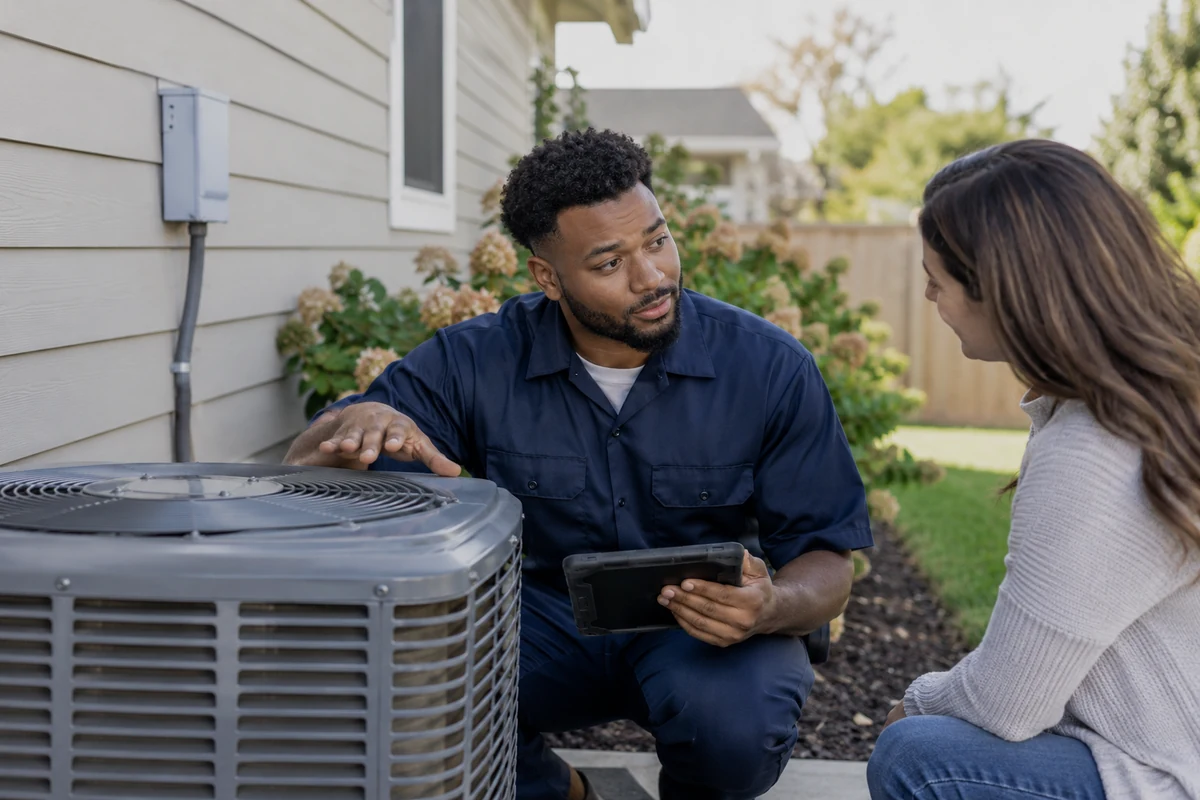
Use this guide to understand common heat pump repair situations, organize the symptoms or project details, and prepare for a service conversation. Quick Home Services connects service requests with independent professionals and does not diagnose or quote property-specific work online.
Describe what you can see, hear, smell, or feel at the property. A clear symptom is more useful than guessing which part has failed.
Mention the thermostat mode, outdoor conditions, indoor temperature, and whether the system produces any conditioned air at all.
Long cycles can involve weather load, airflow, controls, refrigerant-side concerns, auxiliary heat, equipment condition, or sizing. Note whether comfort is improving while it runs.
Some frost can occur during heating operation, but persistent heavy icing, poor defrost behavior, or ice with loss of comfort can justify service.
Describe rattling, grinding, buzzing, unusual odor, or reduced airflow and whether the symptom comes from the indoor or outdoor equipment.
Similar symptoms can have different causes. These are broad categories to help you understand what may be inspected, not a remote diagnosis.
Restricted filters, blower issues, blocked registers, duct problems, or dirty coils can affect comfort and system operation.
Thermostats, control boards, temperature sensors, reversing controls, and defrost components can affect how a heat pump changes modes and manages cold-weather operation.
Leaks, compressor problems, fan issues, coils, valves, and other equipment-specific faults require professional diagnosis.
Explain what is happening now and whether you are seeking repair, replacement, installation, maintenance, or an evaluation. For heat pump repair, equipment age, visible damage, recent changes, and urgency can all be useful.
The service professional may inspect the relevant equipment, piping, controls, connections, airflow, drainage, or other system components before recommending a scope of work.
Before authorizing work, confirm what is included, expected timing, warranty terms when offered, permits or code-related requirements when applicable, and whether repair or replacement alternatives should be considered.
You do not need to diagnose the problem yourself. These details can help the first conversation focus on the right service category and level of urgency.
For smoke, fire, sparking, a suspected gas leak, carbon-monoxide concern, or another immediate danger, leave the affected area and contact the appropriate emergency or utility service before arranging routine HVAC work.
Browse currently available Quick Home Services locations for local service information and the dedicated phone line for your service request.
Call 24/7 about heating repair, heater problems, no heat, uneven heating, heat pumps, furnaces, thermostats, and residential heating-system service needs.
View Heating repair guideCall 24/7 about AC repair, air conditioner problems, AC not cooling, warm air, frozen coils, weak airflow, water leaks, and central air service needs.
View AC repair guidePlan HVAC maintenance, AC tune-ups, furnace maintenance, filter and airflow checks, seasonal inspections, and preventive heating and cooling service.
View HVAC maintenance guidePossible categories include thermostat settings, airflow restrictions, outdoor-unit conditions, defrost or control problems, auxiliary heat issues, or refrigeration and mechanical faults. A service inspection is needed to identify the actual cause.
Check that the thermostat is set to cooling and the filter is not obviously blocked. If the system still runs without cooling, service may be needed for airflow, electrical, control, refrigeration, or equipment problems.
Compare equipment age, repair cost, frequency of breakdowns, comfort, efficiency, warranty coverage, and the cost and benefits of replacement before deciding.
The HVAC line is answered 24/7. Describe the symptom and conditions at the property and ask about current service availability; a 24/7 answered line does not guarantee a specific arrival time.
Call the dedicated HVAC line, describe the symptoms, and ask about current availability in your area.